
Hussaini Suspension Bridge
194 metres of planks and rope over the Hunza river.
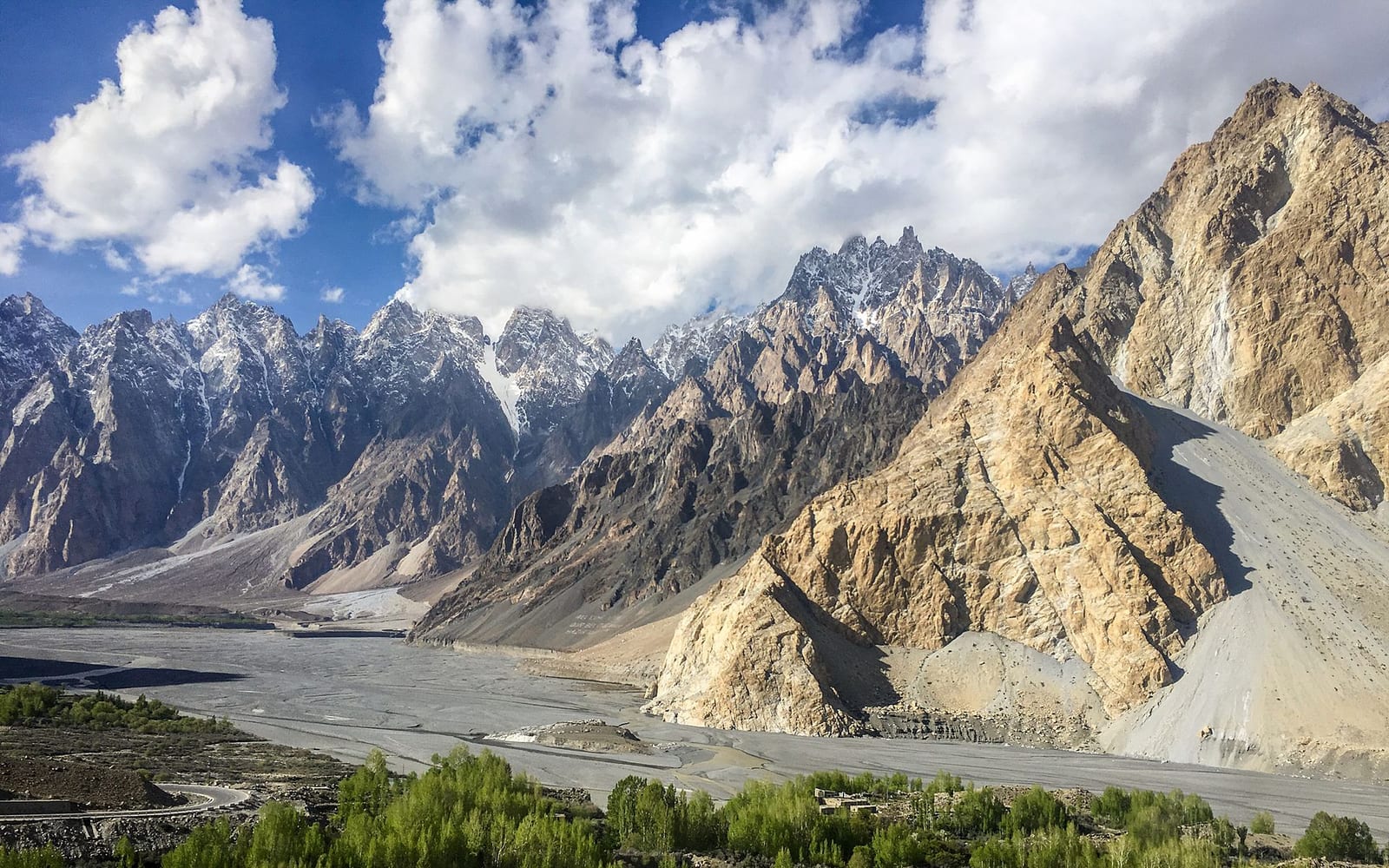
The Hussaini bridge carries villagers and visitors about 194 metres across the Hunza river between Hussaini and Zarabad, on wooden planks spaced deliberately wide along six main ropes — a genuine thrill, maintained by the village it serves, with the Passu Cones behind it. A small community fee pays for its upkeep; go early, ahead of the July–August crowds.
It looks like a dare and functions like infrastructure: at harvest, villagers cross with sacks of wheat and potatoes on their backs while visitors inch and film. The gaps between the planks are deliberate — they let the wind through so the bridge sways less — and the six ropes do the holding. Across the river are Zarabad's fields, which is why the bridge exists at all.
Elders first built a bridge here in the 1960s so the village could reach those fields. After the 2010 Attabad disaster swept it away, it was rebuilt with help from the Aga Khan Rural Support Programme. Villagers hand out life jackets and keep order on the busy days, and they have asked the government for a concrete bridge.
On the KKH between Gulmit and Passu, about 38 km beyond Karimabad (45 km from Aliabad); a path drops from the highway to the bridge. Pairs with the Passu Cones and Borith Lake, 2 km above Hussaini village, in a half-day Gojal loop.
Plan your visit
- Fee
- A small community fee, paid at the bridge for its upkeep: Rs 100 per visitor when Dawn reported it in 2021. Check the current rate on the day.
- The bridge
- About 194 m long on six main ropes, linking Hussaini, on the highway side, with Zarabad across the river.
- Crowds
- July and August are the busy months — Dawn counted about a hundred visitors on a single July afternoon.
- Altitude
- About 2,400 m, at river level.
What's nearby
- Borith Lake
- About 2 km above Hussaini village by a paved road: a bird sanctuary where ducks and geese stop on the March–June and September–November migrations.
- Passu Cones
- Passu village is 9 km north by road; the mapped viewpoint for the cones is 4 km beyond it.
- Gulmit
- Gojal's main town, about 6 km south: hotels, a cultural museum and a women's craft cooperative.
- Attabad Lake
- The 2010 landslide lake, back down the KKH toward Karimabad.
Know before you go
- Wear the life jacket the villagers hand out. In July 2022 a visitor fell from the bridge and died, and the district sealed it for some days.
- Keep your phone and camera on a strap — the gaps between the planks are wide.
- Skip it in strong wind or if you're unsteady on your feet; our guides make the go/no-go call.
Questions, answered
Is the Hussaini bridge actually safe?
It's working village infrastructure crossed daily by locals, but it isn't risk-free: a visitor fell to his death in July 2022 and the bridge was sealed for some days. Wear the life jacket offered, hold both ropes and skip it in high wind — our guides call the go/no-go.
How long is the Hussaini bridge?
About 194 metres, made of wooden planks on six main ropes across the Hunza river.
Is there a fee to cross?
Yes — a small community fee for the bridge's upkeep, Rs 100 per visitor when Dawn reported it in 2021. Check the current rate at the bridge.
When was the Hussaini bridge built?
Villagers first built a bridge here in the 1960s to reach their fields. The 2010 Attabad disaster swept it away, and today's bridge was rebuilt with the Aga Khan Rural Support Programme's help.