
Nanga Parbat
Diamer — 'King of the Mountains'; the 'Killer Mountain'
The lone giant with the tallest mountain wall on Earth.
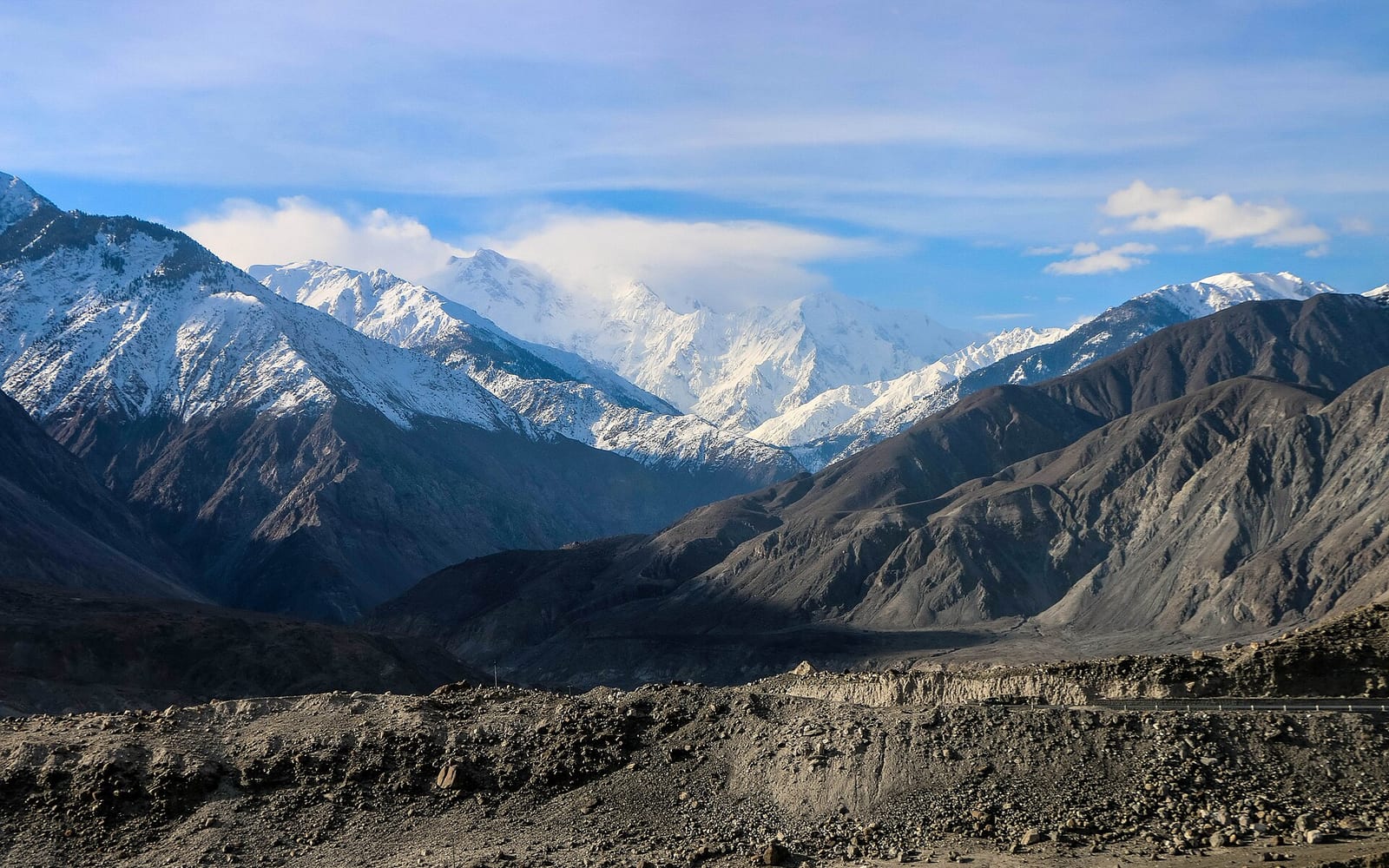
Nanga Parbat (8,126 m) is the world's ninth-highest mountain and the western anchor of the entire Himalaya, standing alone in Gilgit-Baltistan with no neighbouring giants to share its skyline. Its Rupal Face is the highest mountain wall on Earth — ~4,600 m of continuous rise — and its pre-1953 expedition history earned it the name 'Killer Mountain'. It is also the most accessible 8,000er view in Pakistan: Fairy Meadows puts it at your breakfast table after one jeep ride and an hour's walk.
| Elevation | 8,126 m / 26,660 ft |
| World rank | 9th highest on Earth |
| Range | Western Himalaya (its western anchor) |
| First ascent | 3 July 1953 — Hermann Buhl, solo, without oxygen |
| Where it stands | Diamer district, Gilgit-Baltistan, Pakistan — rising alone above the Indus, ~90 minutes' drive from Gilgit at Raikot Bridge. |
Hermann Buhl's 1953 first ascent remains mountaineering's most extraordinary single act: alone above his team's top camp, without oxygen, standing overnight on a ledge at 8,000 m, summiting forty hours after setting out. Nothing comparable has happened on an 8,000er since.
For travellers the mountain is generous in a way K2 never is: the Karakoram Highway passes its Raikot flank, the Fairy Meadows cabins face the summit directly, and our Islamabad–Skardu flights hold the Rupal and Raikot faces in the left windows for ten full minutes.
Questions, answered
Where is Nanga Parbat?
In Gilgit-Baltistan's Diamer district, Pakistan — the Himalaya's western full stop, rising alone above the Indus bend. Raikot Bridge on the Karakoram Highway, 90 minutes from Gilgit, is the gateway; Fairy Meadows sits directly under the north face.
Why is it called the Killer Mountain?
Thirty-one climbers died on it before the first ascent in 1953 — including the devastating 1937 German expedition. Modern statistics are far kinder, but the name, like the Rupal wall, refuses to shrink.
What is special about the Rupal Face?
It is the highest mountain face on Earth — roughly 4,600 vertical metres from base to summit, half again taller than Everest's southwest face. Standing beneath it in the Rupal valley recalibrates what 'big' means permanently.